
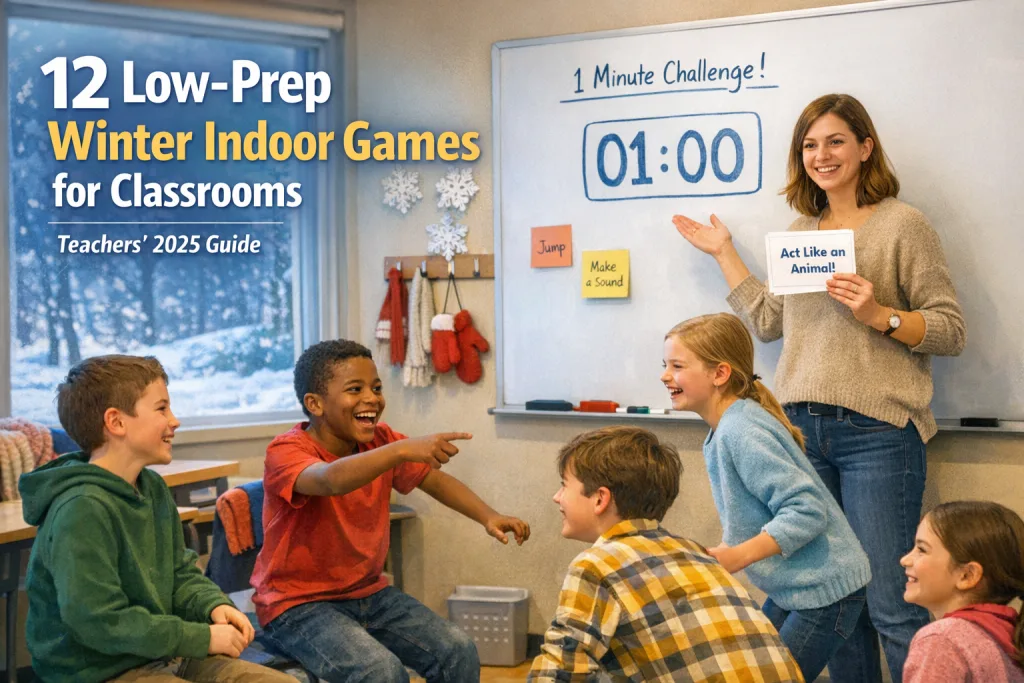
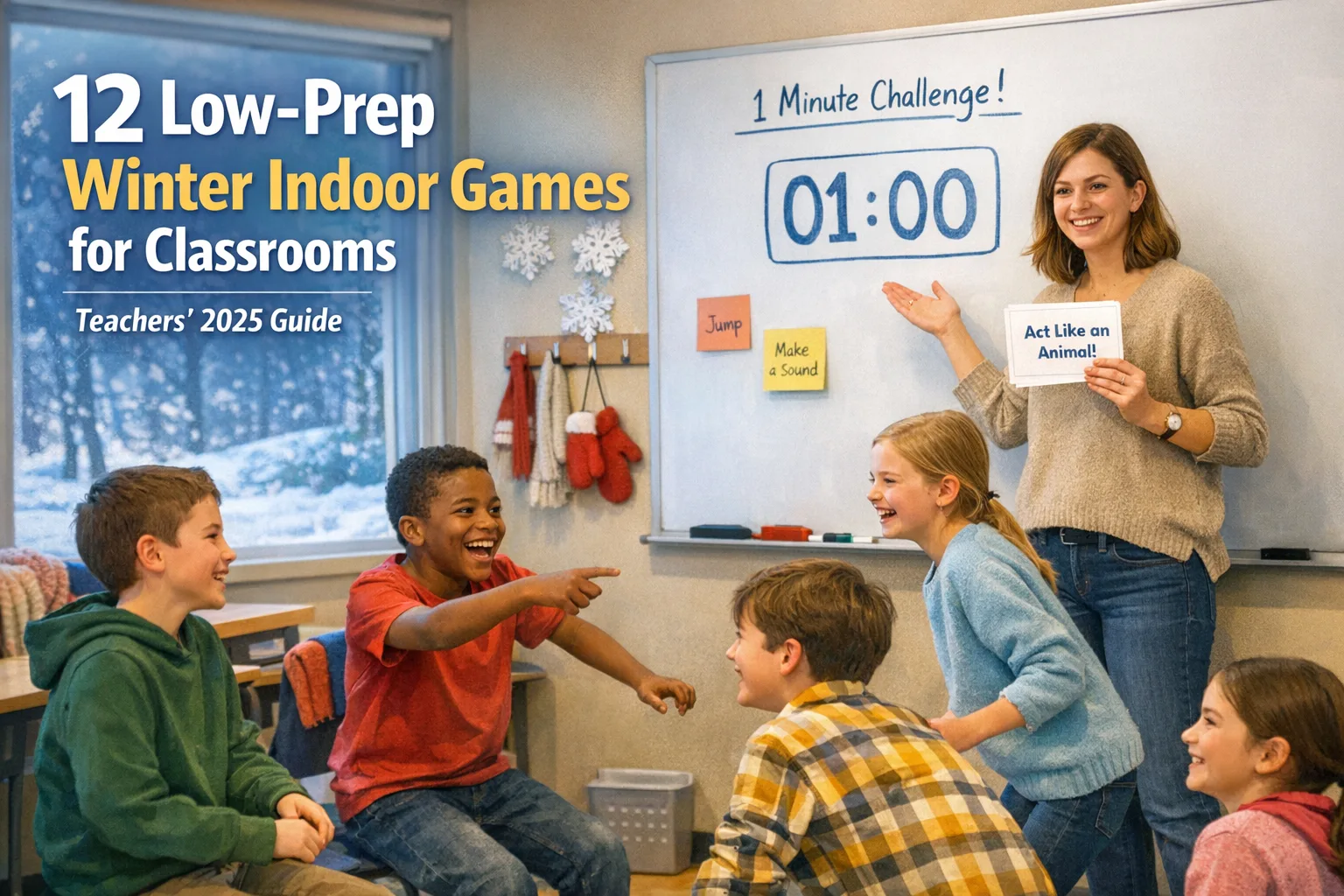
Stuck inside for recess again? You’re not alone. January brings the universal teacher challenge: managing boundless student energy within four quiet walls. The post-holiday slump is real, and the search for activities that are both easy and educational feels endless.
The usual fallbacks often add to your workload. Crafts require major prep and cleanup. Movie days disconnect from learning. And small-group games leave most of your class uninvolved.
What you need are winter games for school that actually work for you: zero preparation, true educational value, and full-class inclusion. This isn’t about adding another complex item to your plan; it’s about having a simple, versatile tool to transform chaotic indoor time into connected learning time.
This guide delivers exactly that. Move beyond generic activity lists with 12 structured, engaging games designed for the real K-8 classroom. Discover how to turn the long winter stretch into a season of positive engagement, where every minute counts.
Let’s reclaim those indoor days.
What Makes Great winter games for school?
Before exploring specific games, let’s establish the criteria that separate excellent classroom activities from time-wasting distractions.
Essential Features Checklist:
- ✅ Setup under 2 minutes – No hunting for materials or explaining complex rules
- ✅ Zero student accounts required – Privacy-friendly and eliminates login problems
- ✅ Big-screen compatible – Works on SmartBoards, projectors, or any display
- ✅ Curriculum-aligned – Reinforces actual learning objectives, not just entertainment
- ✅ Reusable all season – Modify and replay without starting from scratch
- ✅ Scales for 10-30 students – Whole-class participation, not small group rotation
- ✅ Flexible time blocks – Works for 10-minute brain breaks or 30-minute game sessions
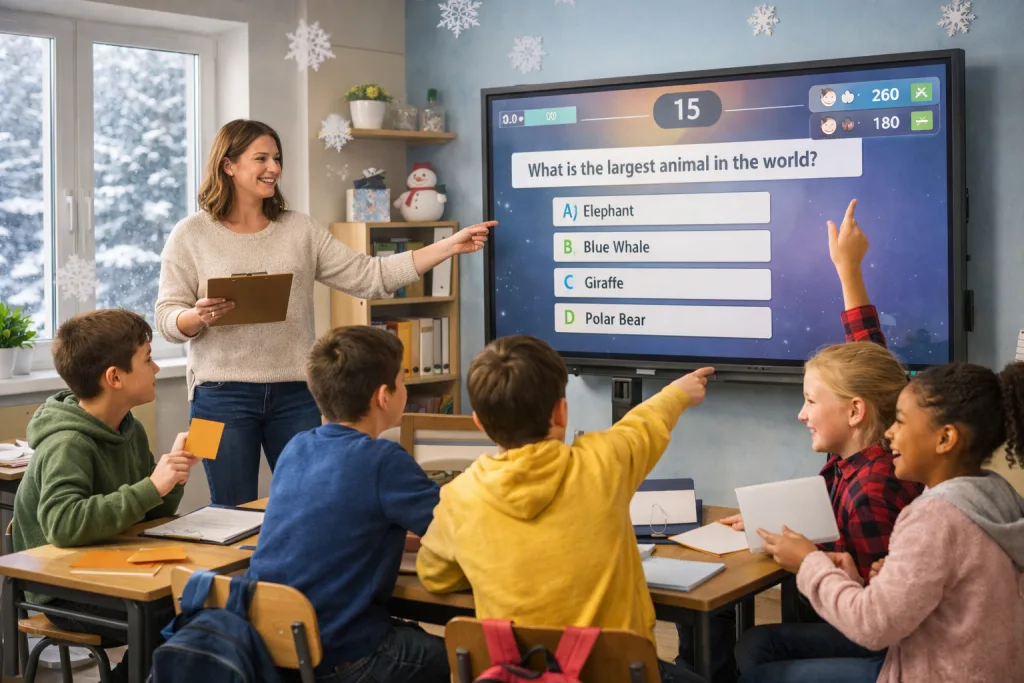
This checklist explains exactly why digital game-show platforms consistently outperform traditional winter activities. While physical games require gathering materials, explaining rules, and managing chaos, screen-based quiz games provide instant structure and engagement.
Why TriviaMaker Solves the Winter Indoor Recess Problem
Teachers need solutions, not more work. Consequently, TriviaMaker addresses the core winter classroom challenges through its unique combination of features.
Speed Advantage Building a quiz game takes less time than organizing a scavenger hunt. In fact, you can duplicate a pre-made winter game and customize two questions in under three minutes. Therefore, even last-minute indoor recess announcements don’t derail your day.
Universal Inclusion Every student participates from their seat, eliminating physical limitations that exclude some children from active games. Moreover, team formats let students collaborate regardless of individual ability levels.
Built-In Structure Clear rules and objectives minimize the chaos that often accompanies free play during indoor recess. Additionally, on-screen timers and scoreboards naturally regulate classroom energy without constant teacher intervention.
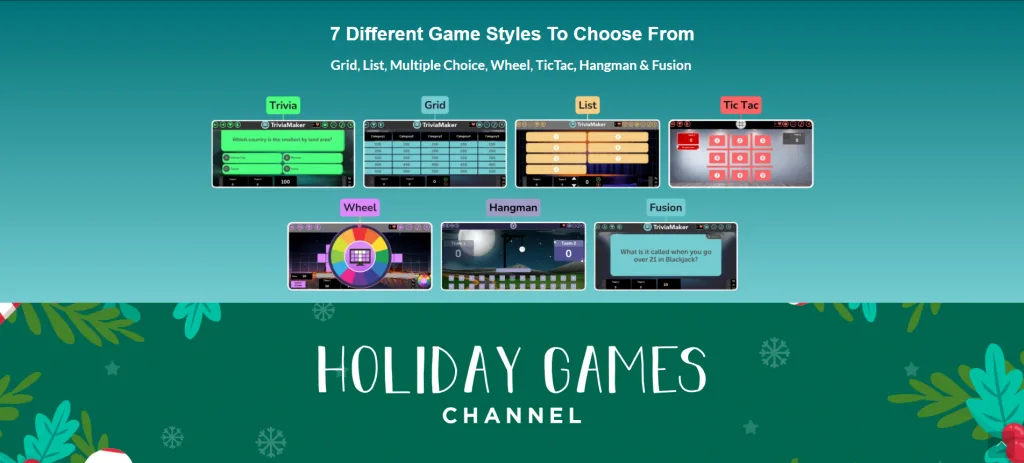
Format Variety Multiple game styles prevent the boredom that sets in when you repeat the same activity weekly. Furthermore, rotating between trivia, grid, wheel, and other formats keeps students guessing what comes next.
Resource Library Pre-made winter content saves hours you’d otherwise spend creating activities from scratch. As a result, you can focus your preparation time on actual lesson planning rather than indoor recess management.
This combination creates your unique advantage over generic activity lists that require extensive modification before use.
The 8 Essential TriviaMaker Winter Games
1. Winter Trivia Blizzard
Format: Classic Trivia Quiz
Best For: Grades 2-6, Knowledge Review
Setup Time: Under 2 minutes
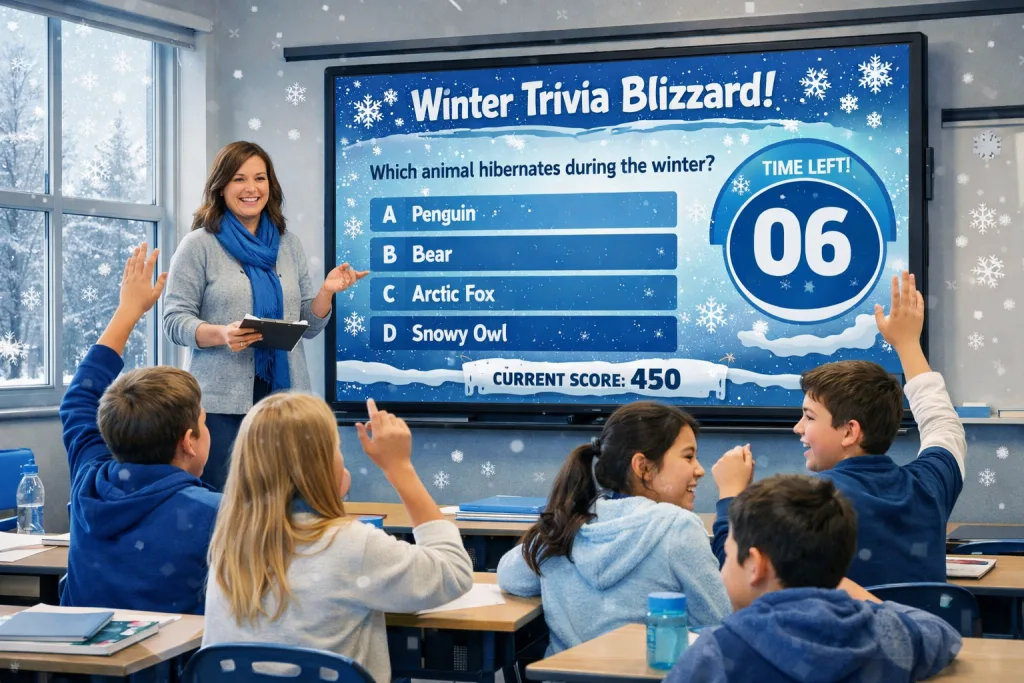
This traditional quiz format presents questions about winter science, holidays, and seasonal topics. Students answer individually or in teams, earning points for correct responses.
Why It Works: The familiar format reduces cognitive load, letting students focus on content rather than learning complicated game mechanics. Additionally, you can easily adjust difficulty by selecting age-appropriate questions.
Pro Classroom Tip: Use this format on Mondays to review previous week’s content with winter-themed questions. For instance, turn multiplication practice into “Snowflake Math Facts” or vocabulary review into “Winter Word Challenge.”
2. Holiday Guess-the-Grid
Format: Grid Game
Best For: Grades 3-8, Team Competition
Setup Time: Under 5 minutes
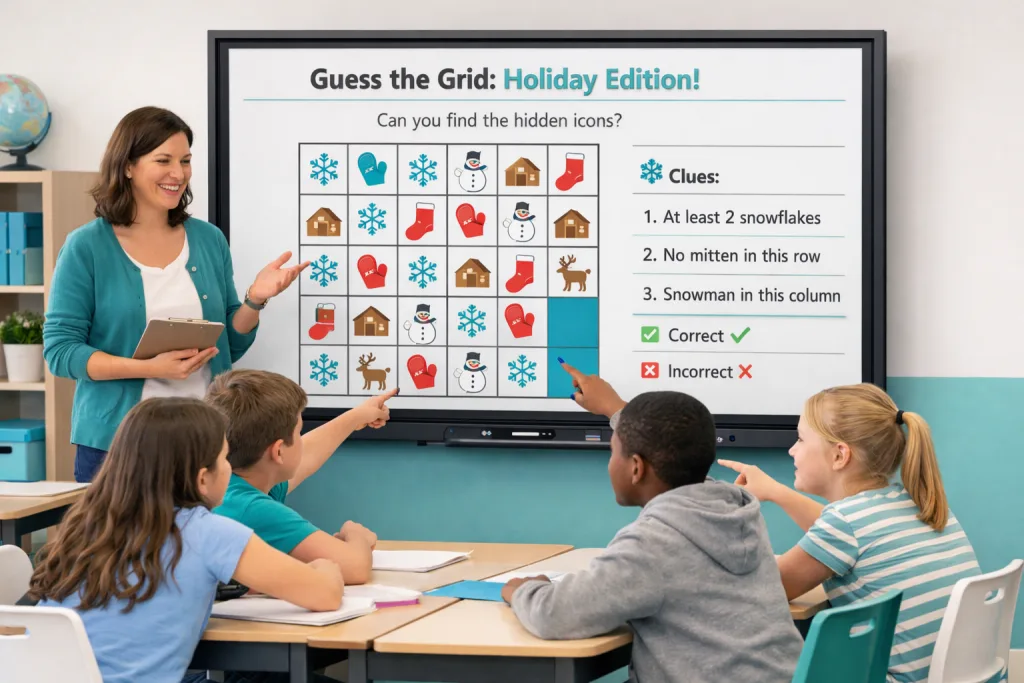
This grid format displays categories across the top with point values increasing downward. Teams choose squares strategically, balancing risk and reward.
Why It Works: The strategic element engages even students who struggle with competitive pressure. Moreover, different point values let you scaffold difficulty, placing easier questions at lower point values.
Pro Classroom Tip: Create mixed-ability teams before winter break, then use consistent teams throughout January and February. Consequently, students develop teamwork skills while maintaining friendly rivalry.
3. Snowflake Science Wheel
Format: Spin-the-Wheel Quiz
Best For: Grades K-5, High-Energy Engagement
Setup Time: Under 3 minutes
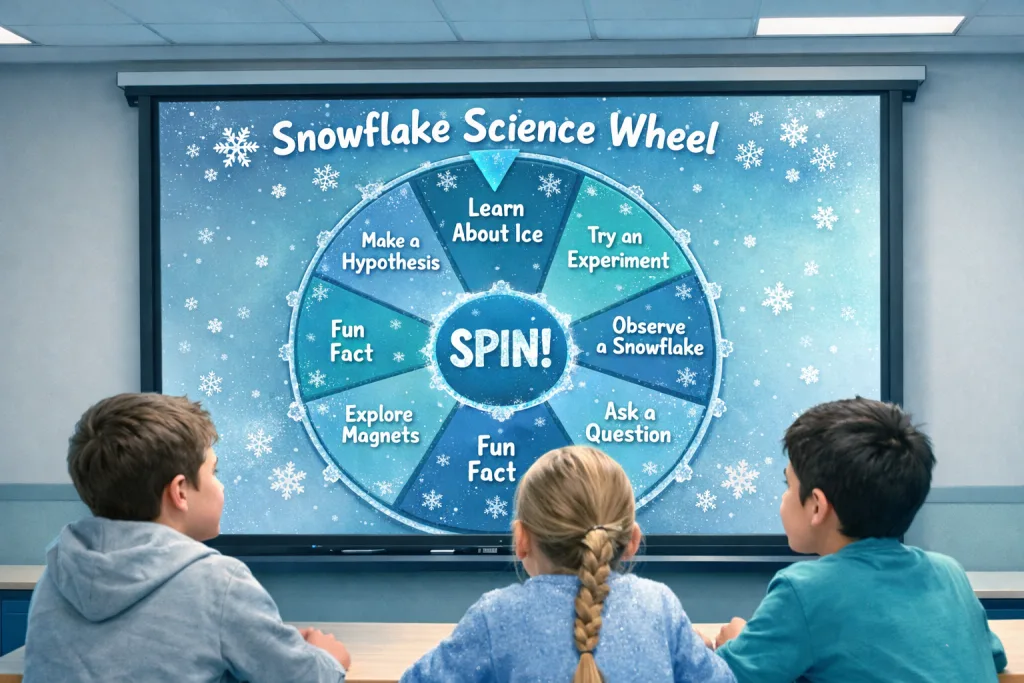
An animated wheel spins to randomly select questions about winter weather, snow formation, and seasonal science. The visual excitement builds anticipation before each question.
Why It Works: The spinning animation creates natural suspense that captures attention immediately. Furthermore, the randomization feels fair, reducing complaints about question difficulty or selection.
Pro Classroom Tip: Let the “Student of the Day” spin the wheel, creating special classroom jobs that students look forward to earning. Additionally, this gives quieter students moments to shine in a structured way.
4. Winter Olympics Challenge
Format: Fusion Game (Multiple Mechanics)
Best For: Grades 4-8, Cross-Curricular Learning
Setup Time: Under 5 minutes
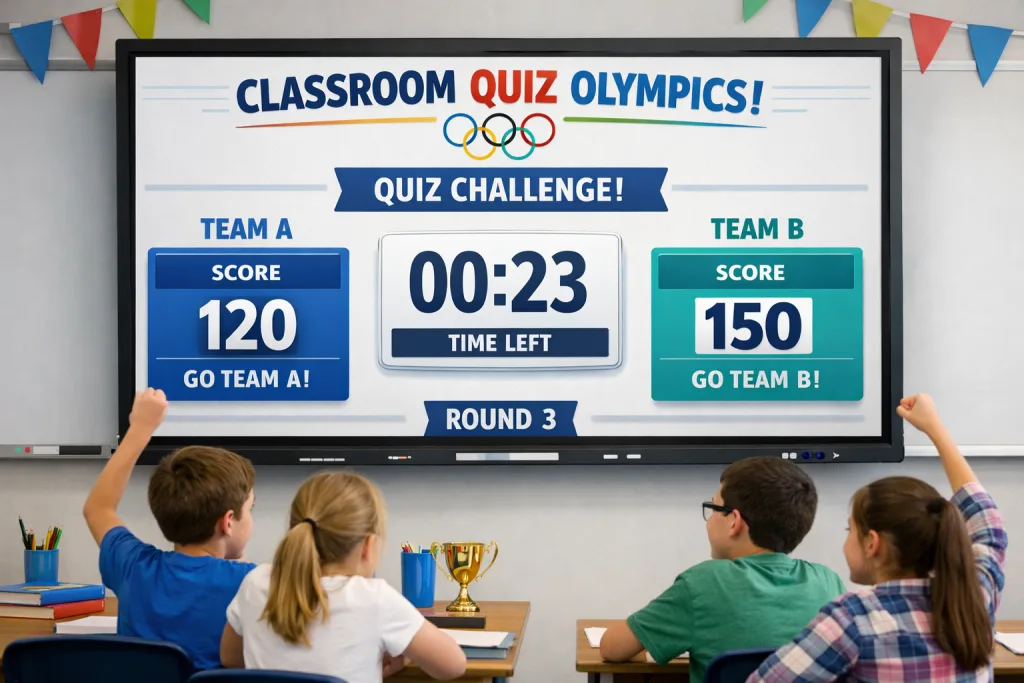
This game combines quiz questions with Olympic-themed challenges, covering sports history, geography of host cities, and athlete achievements. Teams represent different “countries” competing for gold medals.
Why It Works: The thematic consistency creates an immersive experience beyond simple Q&A. Moreover, the February timing aligns perfectly with Winter Olympics 2025 anticipation.
Pro Classroom Tip: Connect to social studies by having students research their assigned country’s winter sports history. Subsequently, integrate their findings into custom questions you add to the game.
5. Arctic Animals Quiz
Format: Traditional Trivia
Best For: Grades 1-5, Science Standards Alignment
Setup Time: Under 2 minutes
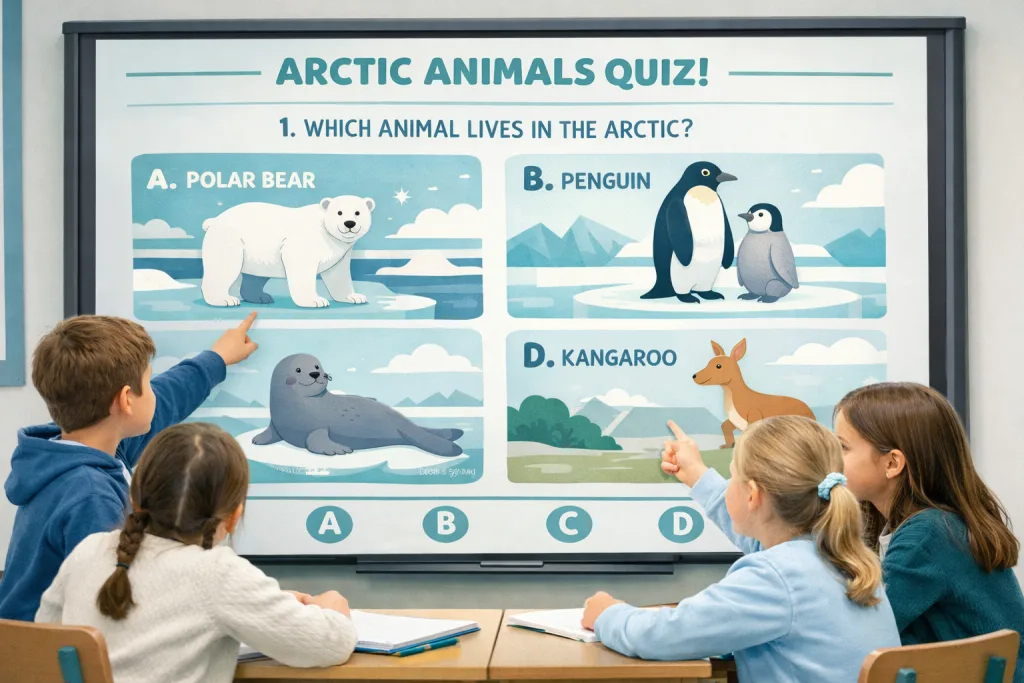
Questions focus on polar bears, penguins, arctic foxes, and other cold-weather animals, covering adaptations, habitats, and ecosystems.
Why It Works: Natural science curriculum alignment makes this educational rather than just entertaining. Additionally, animal content naturally engages elementary students while teaching genuine science concepts.
Pro Classroom Tip: Follow the quiz with a read-aloud about the winning team’s favorite arctic animal. Consequently, you seamlessly transition from game time back to instructional time.
6. Vocabulary Snowman Hangman
Format: Hangman Word Game
Best For: Grades 2-6, Literacy Practice
Setup Time: Under 3 minutes
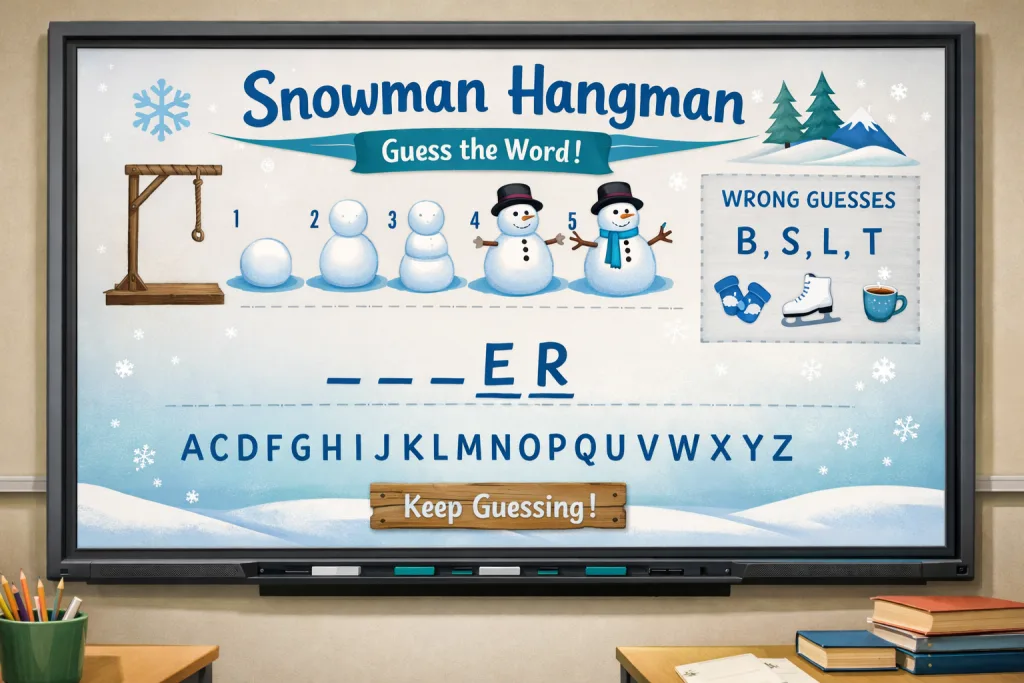
This classic word-guessing game uses winter vocabulary, spelling words, or content-specific terminology. Students suggest letters to reveal the hidden word before the snowman melts.
Why It Works: The familiar format requires no explanation, making it perfect for substitute teachers or emergency indoor recess. Furthermore, the quieter gameplay works well after lunch when students need calming activities.
Pro Classroom Tip: Use your actual weekly spelling list as the word bank. Therefore, students get additional practice without feeling like they’re doing “more spelling work.”
7. Tic-Tac-Trivia: Winter Edition
Format: Tic-Tac-Toe Strategy Game
Best For: Grades 3-8, Critical Thinking
Setup Time: Under 2 minutes
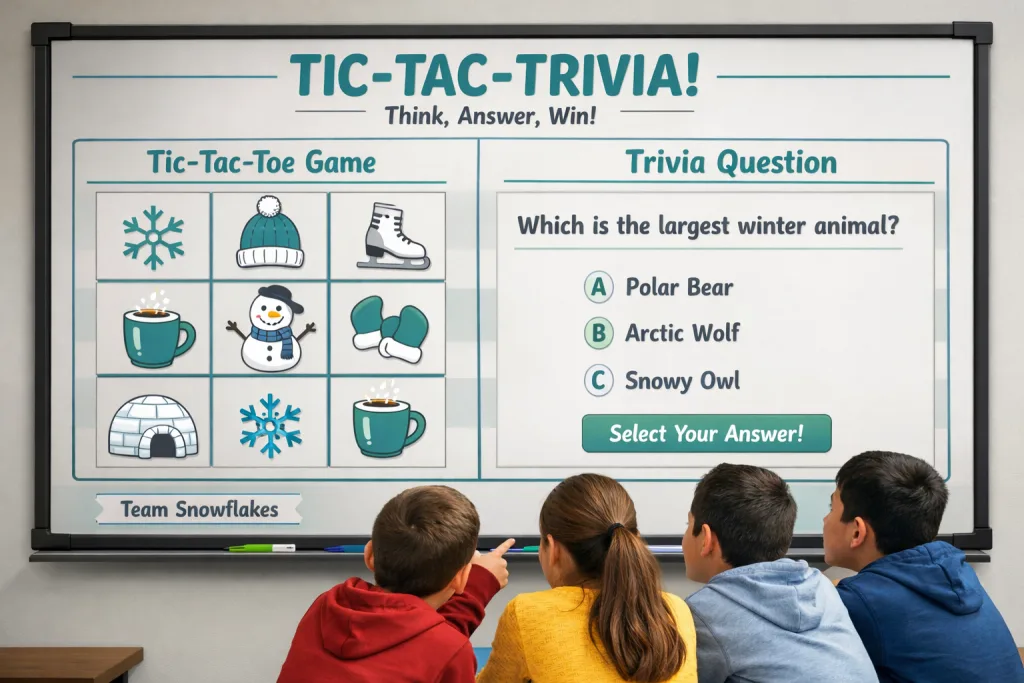
Two teams compete for squares on a tic-tac-toe board by answering questions correctly. However, strategy matters, teams must think about both answering correctly AND board positioning.
Why It Works: The dual-layer challenge (content + strategy) engages students operating at different cognitive levels. Moreover, games typically last 10-15 minutes, perfect for mid-morning brain breaks.
Pro Classroom Tip: Assign team captains who make the final decision on square selection. Consequently, you’re teaching leadership and consensus-building alongside academic content.
8. Math Fact Snowball Fight
Format: Fusion or Crowd Mode
Best For: Grades K-5, Math Fluency
Setup Time: Under 3 minutes
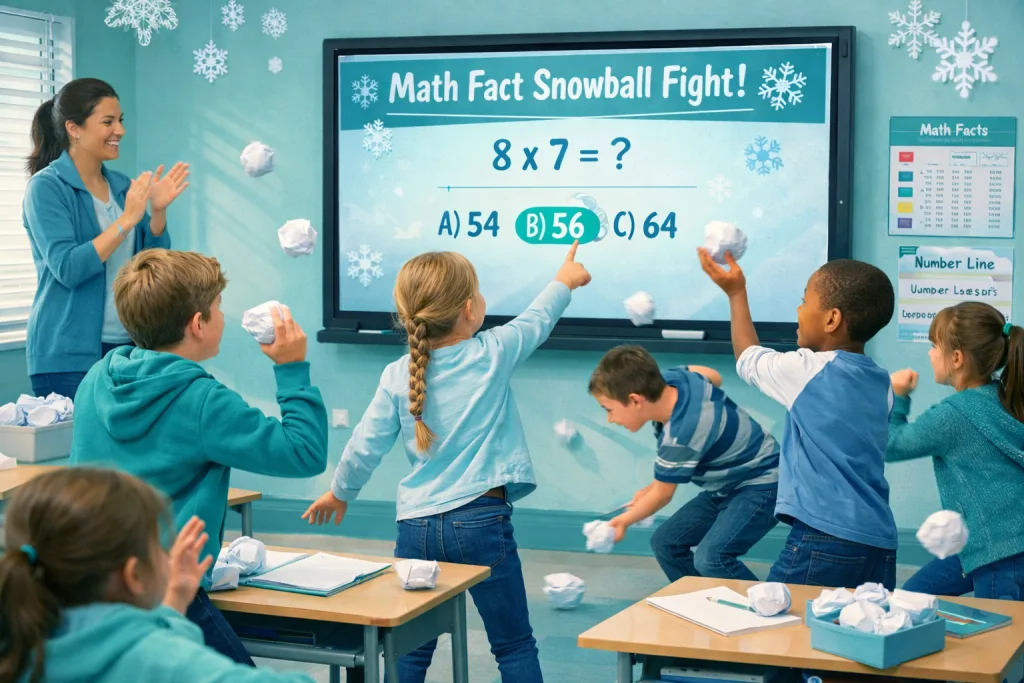
Students “throw snowballs” (answer math problems) to hit targets and earn points. The game combines math practice with competitive excitement.
Why It Works: The action-game metaphor transforms repetitive math practice into exciting competition. Additionally, the fast pace maintains engagement even for students who typically resist computation practice.
Pro Classroom Tip: Adjust difficulty by operation (addition, subtraction, multiplication, division) based on your current math unit. Furthermore, use this format for timed fact practice that doesn’t feel like timed tests.
4 Complementary Physical Games
While digital games form your core strategy, occasionally students need pure movement. Therefore, integrate these simple physical activities strategically.
Freeze Dance (Winter Music Edition) Play winter-themed songs; students freeze when music stops. Follow with a TriviaMaker trivia quiz to transition back to focused learning while maintaining the winter theme.
Arctic Animal Charades Students act out polar animals while classmates guess. Follow with the Arctic Animals Quiz to reinforce scientific terminology and facts learned through movement.
Would You Rather: Winter Edition Pose winter scenario choices; students discuss preferences. Follow with a Winter Trivia Blizzard to test knowledge about actual winter facts versus preferences.
Paper Snowball Toss Toss crumpled paper into buckets from increasing distances. Follow with Math Fact Snowball Fight to maintain the snowball theme while adding educational rigor.
Pattern to Notice: Physical games work best as brief energizers before transitioning to structured quiz games that deliver actual learning outcomes.
The 5-Minute Winter Game Setup System
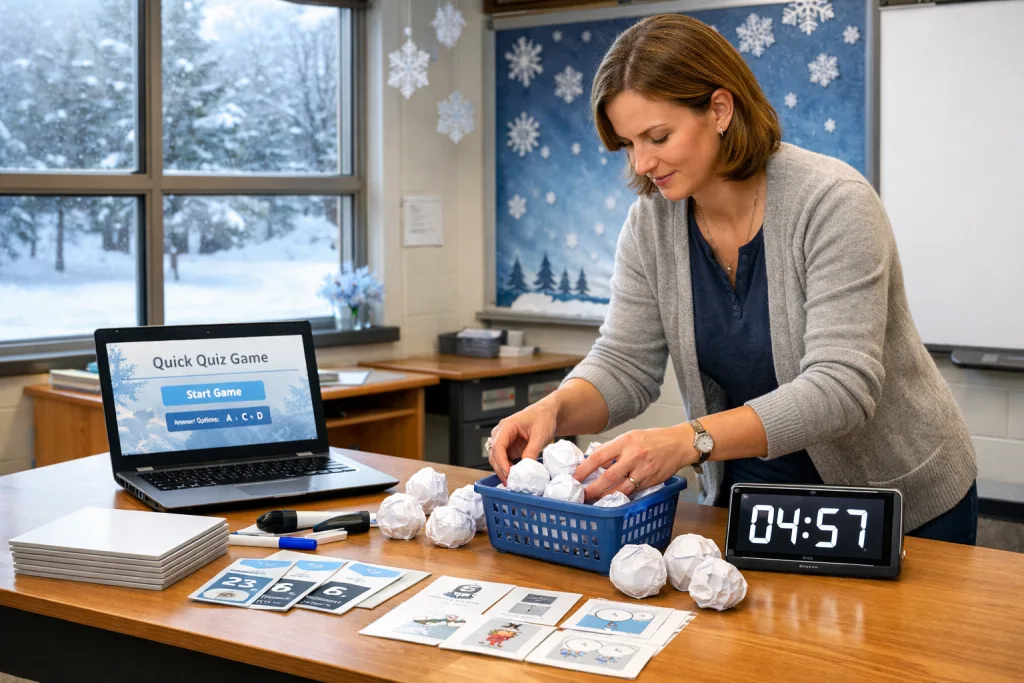
Even the best games fail without smooth implementation. Consequently, follow this proven system for stress-free game hosting.
Step 1: Choose Your Format Based on your learning objective and class energy level, select one game from the eight core options above. For instance, choose Grid Games for team competition or Wheel Games for high excitement.
Step 2: Access Pre-Made Content Visit the Public Games Library and search “winter” or browse the Holiday Games Channel. Subsequently, duplicate any game that matches your grade level and topic.
Step 3: Quick Customization (Optional) Edit 1-2 questions to match your current lesson or add student names for personalization. However, most pre-made games work perfectly without any modification.
Step 4: Project and Share Display your screen via SmartBoard or projector. Share the simple join code displayed on screen, students need nothing except the code to participate.
Step 5: Host Your Game Show Click “Start Game” and follow the on-screen prompts. The platform handles timers, scoring, and question sequencing automatically while you facilitate discussion.
Total Time: 2-5 minutes from decision to gameplay.
The Winter Game Rotation Strategy
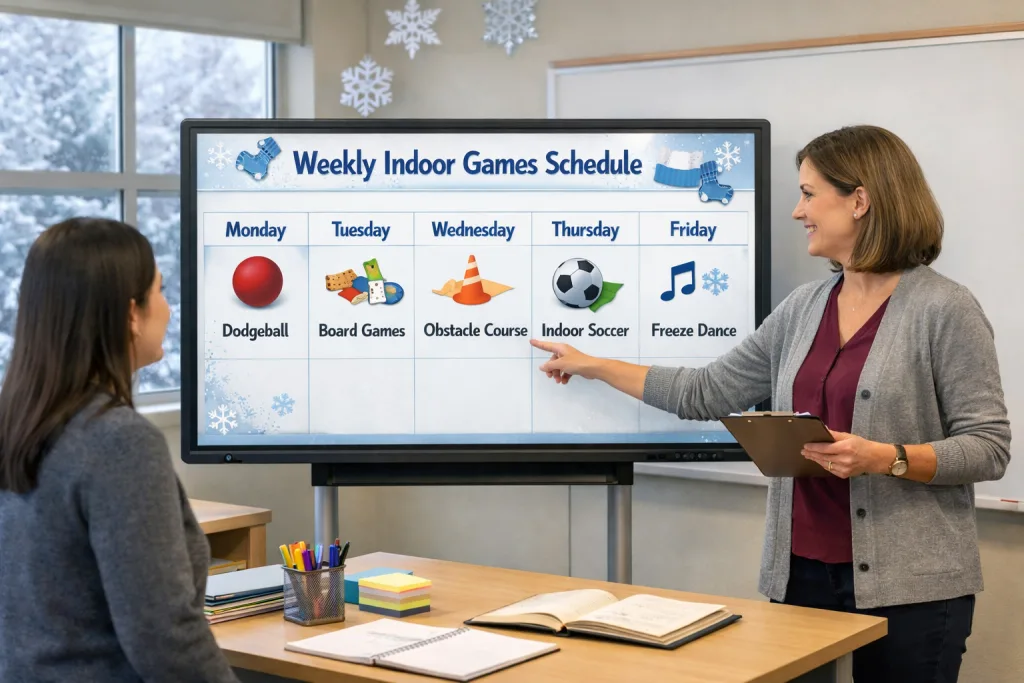
Consistency prevents decision fatigue while variety prevents boredom. Therefore, implement this proven weekly structure.
The Weekly Plan
Monday: Review Quiz (15 minutes) Use Winter Trivia Blizzard or Arctic Animals Quiz to review previous week’s content. Consequently, you’re assessing retention while providing engaging start-of-week energy.
Wednesday: Theme Day (20 minutes) Rotate between Grid Games and Wheel Games for mid-week engagement. Additionally, let students vote between two pre-selected options to increase buy-in.
Friday: Student Choice (25 minutes) Allow winning team from Wednesday to choose Friday’s game format. Furthermore, this creates authentic motivation for Wednesday’s competition.
Quick-Fire 10-Minute Versions
For unexpected early finishes or transition periods, keep three games in your “Quick Play” folder. Specifically, Hangman and Tic-Tac-Trivia work perfectly for short time blocks.
Emergency Indoor Recess Kit
Designate one “Ready-to-Launch” game that stays permanently set up. When weather forces sudden indoor recess, you’re literally 30 seconds from starting without any preparation scramble.
Game Format Comparison: Digital vs. Physical
| Feature | TriviaMaker Digital Games | Traditional Physical Games |
|---|---|---|
| Setup Time | 2-5 minutes | 15-30+ minutes |
| Materials Needed | Screen only | Supplies, printing, equipment |
| Student Participation | Whole class simultaneously | Limited by equipment/space |
| Educational Value | Direct curriculum alignment | Often indirect connection |
| Noise Level | Controlled excitement | Can escalate quickly |
| Reusability | Infinite, easily modified | Single-use or wears out |
| Cleanup Required | None | Gathering materials, tidying |
| Substitute-Teacher Friendly | Extremely simple to execute | Requires detailed instructions |
| Adaptability | Instantly adjust difficulty | Fixed once materials prepared |
| Transition to Learning | Seamless continuation | Often disruptive shift |
Key Insight: Digital games eliminate the friction points that make physical activities exhausting for teachers while maintaining the engagement students crave.
Frequently Asked Questions
Do students need individual devices for these winter indoor games?
No. Most TriviaMaker winter games run on a shared classroom screen. Students can answer verbally, use whiteboards, or play in teams. If needed, they can also join from any browser on shared devices or tablets, keeping setup simple and inclusive.
Is there a free plan for classroom quiz games?
Yes. TriviaMaker offers a free plan that includes core game formats and access to the pre-made winter game library. Teachers can run engaging winter games at no cost, while paid plans add optional advanced features.
Can I align winter games with my curriculum standards?
Absolutely. Teachers can edit pre-made games or create custom ones to match learning objectives. The AI question generator also creates instant quizzes from textbooks, vocabulary lists, or topics you choose.
What grade levels work best with these winter indoor games?
These games work across K-8. Teachers control difficulty, using visuals and simple questions for younger students and more complex content for older grades. Many formats engage all ages equally well.
How do I manage classroom noise during competitive games?
Clear structure helps. Set expectations before playing, use quiet thinking time, and reward respectful teamwork. On-screen timers and automatic scoring naturally regulate excitement without constant reminders.
Can substitute teachers use these winter indoor games?
Yes. TriviaMaker is very substitute-friendly. Pre-made games require minimal setup and no content knowledge. Many teachers prepare “sub-day games” that keep students engaged with zero extra effort.
Conclusion: Winter Success Starts With the Right Tools
Winter doesn’t have to mean educational chaos or endless teacher preparation. Instead, structured game-based learning transforms seasonal challenges into opportunities for joyful engagement.
The twelve winter games to play inside for school in this guide solve the three critical winter problems simultaneously: they eliminate preparation time, maintain educational rigor, and keep every student actively engaged. Moreover, the rotation strategy prevents boredom while the comparison table justifies your choice of digital games over traditional alternatives.
With TriviaMaker as your reliable winter safety net, unexpected indoor recess becomes an opportunity rather than a disruption. Furthermore, students begin looking forward to winter game days, creating positive associations with learning during the season’s darkest, coldest months.
The simple truth: Teachers who implement these strategies report fewer behavior issues, higher engagement, and significantly less stress during winter months. Consequently, your investment of five minutes learning this system pays dividends throughout January, February, and beyond.
Start Your Winter Game Collection Today
Transform how you handle indoor recess this winter. Stop scrambling for last-minute activities every time the weather turns bad.
TriviaMaker’s library of pre-made winter games gives you instant access to engaging, curriculum-aligned content that students genuinely enjoy. Moreover, the platform requires zero technical expertise, if you can project your screen, you can host professional-quality quiz games.
Why Teachers Choose TriviaMaker for Winter:
- ✅ Zero student logins required – Privacy-friendly and eliminates password problems
- ✅ Works on any screen – SmartBoard, projector, or basic display
- ✅ Pre-made winter library – Save hours of creation time
- ✅ 8 game formats – Prevent boredom through variety
- ✅ Free tier available – Try everything in this article at no cost
- ✅ Substitute-teacher proof – So simple anyone can host
Your Next Steps:
- Bookmark this article for reference throughout winter
- Visit TriviaMaker and explore the holiday games channel
- Select three games (one Quiz, one Grid, one Wheel) for your rotation
- Schedule your first game for next Monday’s morning meeting
- Experience the difference structured game-based learning makes
Pro Tip: Start with just one game this week. Once you see how smoothly it runs and how engaged students become, you’ll naturally want to incorporate more games into your weekly routine. Additionally, share successful games with colleagues, building a school-wide winter game culture makes everyone’s life easier.
winter games for school don’t have to be stressful. With the right platform and these twelve proven games, you’ll actually look forward to those indoor recess announcements because you know you’re prepared with activities students love and that reinforce real learning.